
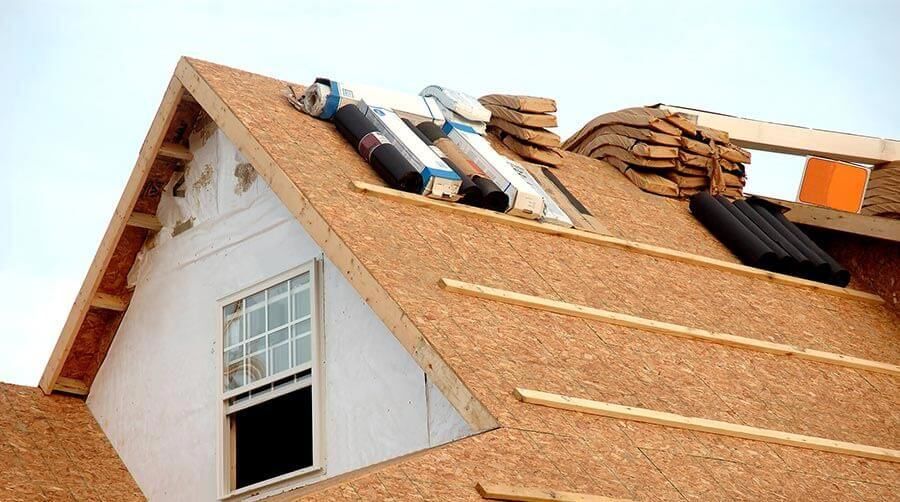
The Ultimate Small Roofing Repairs Guide for Homeowners

Straight Forward Construction • December 18, 2024

Share this article

Keeping your roof in top shape is key to protecting your home. This guide helps homeowners tackle small roofing repairs with confidence. We’ll show you how to spot common issues, do basic maintenance, and know when to call the pros.

Learn to spot early warning signs during a roof inspection. You’ll get tips on DIY fixes to keep your roof strong. Our advice covers simple shingle replacements and fixing minor leaks. This helps extend your roof’s life and saves you from expensive repairs later.

Ready to become a savvy homeowner? Let’s explore small roofing repairs together. Discover how to protect your biggest investment.

Understanding Common Roofing Problems and Warning Signs

Spotting roof damage early can save you money and time. Knowing how to identify issues helps you fix them before they get worse. Let’s look at the signs that your roof might need some care.

Visual Signs of Roof Damage

Regular checks can find visible damage. Look for missing, cracked, or curled shingles. These need quick roof leak repair to stop water damage.

Dark spots or worn-off granules are also warning signs. Don’t ignore them.

Interior Warning Signals

Water stains on ceilings or walls mean a leaky roof. Peeling paint or bubbling wallpaper also show moisture issues. A musty smell in the attic means water is trapped, creating mold conditions.

Weather-Related Damage Indicators

After bad weather, check for storm damage. High winds can lift shingles, and hail can cause dents or cracks. Fallen tree limbs or debris can puncture the roof, leading to leaks.

Being watchful and fixing issues early keeps your roof in good shape. If you’re not sure about your roof, get a professional to check it. Early action can prevent expensive replacements later.

Essential Tools and Safety Equipment for Small Roofing Repairs

Small roofing repairs need the right tools and safety gear. Whether it’s roof patching or shingle replacement, being ready is important. Let’s look at the key items for a safe and good repair job.

  • Hammer and pry bar
  • Utility knife
  • Roofing nails
  • Caulking gun
  • Roofing cement

Safety is the most important thing when working on your roof. Get quality safety equipment:

  • Sturdy ladder
  • Non-slip boots
  • Safety harness
  • Hard hat
  • Safety glasses

For shingle replacement, you’ll need a chalk line and roofing shovel. For roof patching, have a trowel and patch kit ready. Always use safety gear right. Make sure your harness is secure and wear protective gear to avoid accidents.

Before starting, check your tools and safety gear for damage. Replace anything that’s worn out to stay safe. With the right tools and safety steps, you can confidently do small roofing repairs and keep your home safe.

Addressing Shingle Damage and Replacement

Shingle damage can cause big problems if ignored. Knowing how to spot and fix issues can save you money. Let’s look at how to replace shingles and pick the best materials.

Identifying Damaged Shingles

Check for curled edges, cracks, or missing granules on your shingles. Dark spots or bare patches mean they’re worn out. If you see these signs, it’s time to replace them.

Step-by-Step Shingle Replacement Process

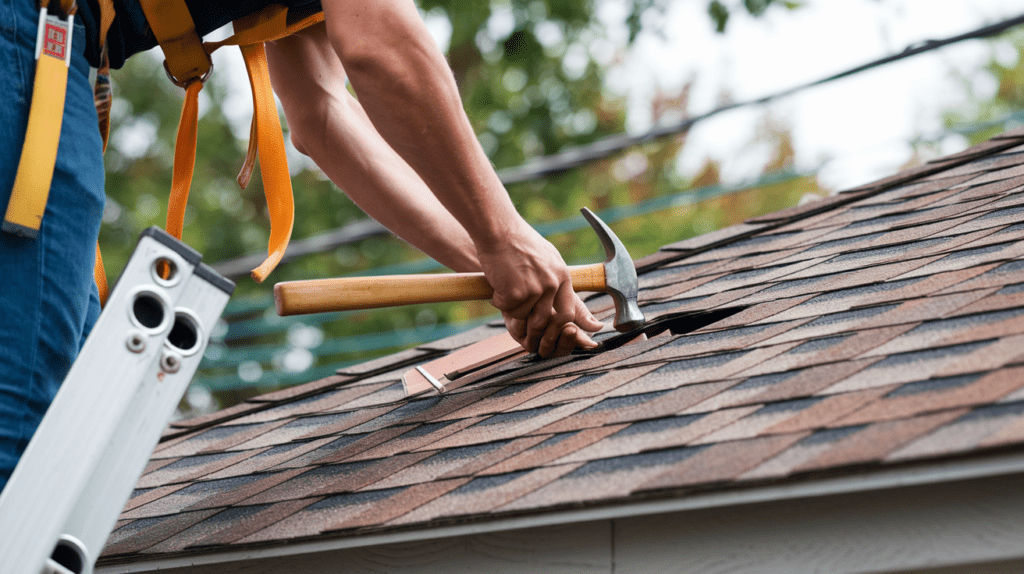
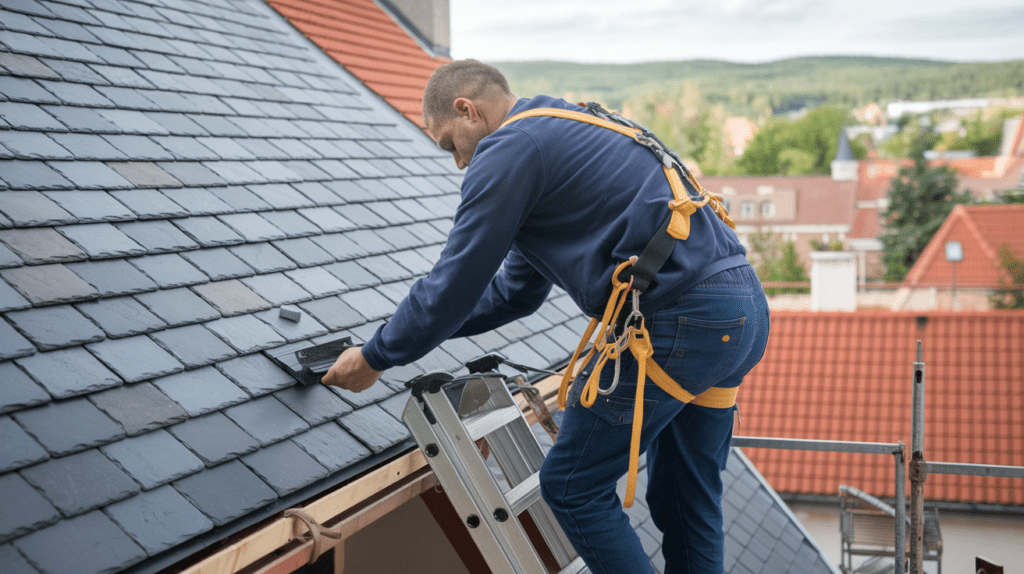
Begin by taking out the damaged shingle. Lift the edges of nearby shingles and remove the nails. Then, slide out the old shingle and put in the new one.

Material Selection Guidelines

Choose materials that match your roof. Think about climate, durability, and cost. Asphalt shingles are affordable and easy to put on. Metal or slate last longer but cost more.

  • Match color and style to existing shingles
  • Consider weight capacity of your roof structure
  • Factor in local weather conditions

While small repairs can be DIY, big jobs need a pro. They ensure your roof is installed right and stays strong.

Quick Fixes for Roof Leaks and Water Damage

Roof leaks can happen anytime, causing water damage and stress for homeowners. Quick action is key to stop more damage. Here are some emergency fixes for roof leaks and water damage.

First, find where the leak is. Look for water stains on ceilings or walls. These usually show where the leak is. Once you find it, cover the area from outside with a tarp. Make sure the tarp is tight to keep water out during rain.

Inside, put buckets under leaks to catch water. This can save your floors and furniture from damage. For small leaks, use roofing cement or sealant. These products make a quick fix until a pro can fix it for good.

Keep in mind, these fixes are just temporary. They help in emergencies but you need a pro to fix it right. A roofing expert can check the damage and fix it for good. They’ll keep your home safe from leaks and water damage.

Small Roofing Repairs You Can DIY

Many homeowners can handle small roofing repairs by themselves. Doing DIY roof repairs and maintenance can save money and make your roof last longer. Let’s look at some tasks you can do on your own.

Basic Maintenance Tasks

Keeping your roof in good shape is important to avoid big problems. Here are some tasks you can do:

  • Clear debris from gutters and roof valleys
  • Trim overhanging tree branches
  • Check for loose or missing shingles
  • Inspect flashing around chimneys and vents

Simple Repair Techniques

For minor issues, try these DIY roof repairs:

  • Replace damaged shingles
  • Seal small leaks with roofing cement
  • Reattach loose flashing

Always be careful when working on your roof. Use the right tools and avoid DIY repairs in bad weather. For more detailed guidance on DIY roof repairs, check out this DIY roofing guide.

When to Call a Professional

While DIY roof maintenance can save money, some issues need a roofing expert. Call an expert if you notice:

  • Large areas of damage
  • Persistent leaks
  • Structural issues
  • Extensive water damage

Remember, safety is the most important thing. If you’re not sure about a repair, it’s best to contact a professional roofer in your area.

Maintaining Roof Flashing and Seals

Keeping your roof’s flashing and seals in good shape is key. They help protect your home from water damage. Regular checks and quick repairs can prevent expensive fixes later.

Flashing is thin metal that keeps water away from your roof’s weak spots. You’ll find it around chimneys, vents, and skylights. If it gets loose or damaged, it can cause leaks. So, fix any wear and tear right away.

Vent pipe sealing is also vital. These seals stop water from getting into your home through vent pipe gaps. Check them often for cracks or wear. Replace them when needed to keep your roof dry.

Don’t overlook chimney cap installation. A good chimney cap keeps rain out and stops animals from nesting. It’s a simple step that can help your chimney and roof last longer.

  • Check flashing for rust, gaps, or loose sections
  • Inspect vent pipe seals for cracks or wear
  • Ensure chimney caps are secure and intact
  • Address any issues promptly to prevent water damage

By keeping up with these maintenance tasks, you can ensure your roof stays in great shape. Avoiding costly repairs is easier. If you’re not sure how to do these tasks, call a professional roofer for help.

Gutter System Maintenance and Repairs

Keeping your gutters in good shape is key to protecting your home from water damage. Regular cleaning and upkeep can save you from expensive fixes later on. Let’s look at how to keep your gutters working well.

Gutter Cleaning and Inspection

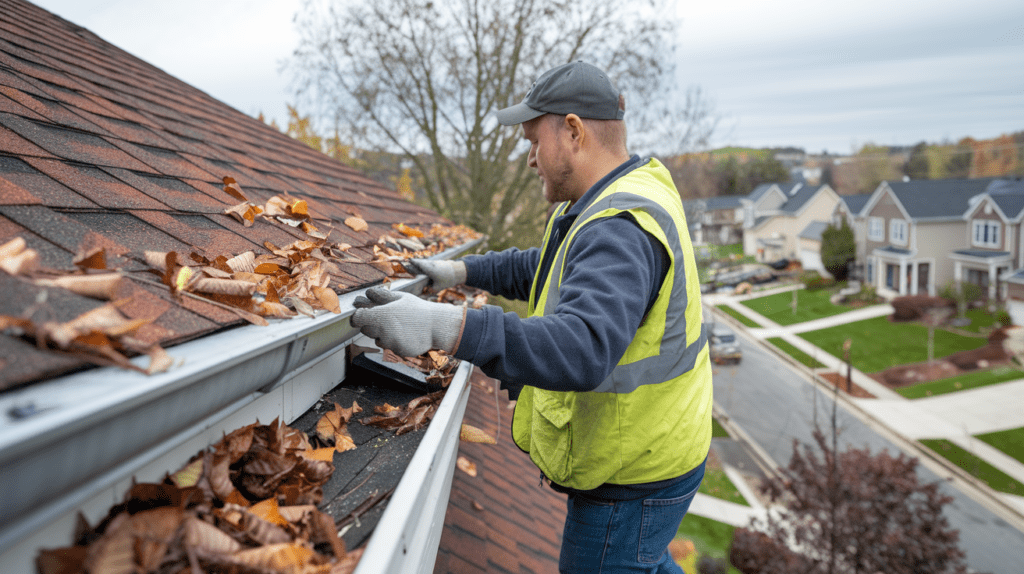
Clean your gutters at least twice a year. Take out leaves and twigs to ensure water flows right. While cleaning, check for any wear or damage.

Common Gutter Problems

Gutters can face many issues over time. Clogged gutters can cause water to overflow and damage your foundation. Sagging gutters might be due to loose fasteners or too much weight.

Leaks often show up at seams or corners. Sometimes, you might need to fix the soffit if water gets behind the gutters.

Repair Solutions

For small leaks, use gutter sealant on joints and seams. If that doesn’t work, replace the damaged parts. Tighten or replace fasteners to fix sagging gutters.

If you see big damage or feel unsure about fixing it, call a pro for gutter care.

Remember, taking care of your gutters is a big part of keeping your home in good shape. By keeping up with cleaning and fixing problems fast, you can avoid water damage and make your gutters last longer.

Conclusion

Keeping your roof in good shape is key for both homes and businesses. This guide has given you the tools to handle small repairs on your own. You now know how to spot problems and do basic upkeep.

While fixing things yourself can save money, some jobs need a pro. For tricky issues or safety risks, it’s best to call in the experts. Straight Forward Construction located in Central Florida is here to help.

Don’t let small problems turn into big headaches. Book a free roof inspection today to keep your place safe. Our team at Straight Forward Construction is ready to help with all your roofing needs. Let us ensure your roof stays strong and safe for many years.

FAQ About Small Roofing Repairs

How often should I inspect my roof for small repairs?

Check your roof twice a year, in spring and fall. Also, inspect after storms or high winds. This helps catch small problems before they get big, saving you money.

What are some signs that my roof needs repair?

Look for missing or damaged shingles, water stains, and granules in gutters. Also, check for sagging areas and daylight through roof boards. If you see these signs, fix them fast to avoid more damage.

Can I perform small roofing repairs myself?

DIY repairs are okay if you’re skilled and safe. Replacing a few shingles or cleaning gutters is usually fine. But, if it’s complex or you’re scared of heights, get a pro.

How do I temporarily fix a roof leak until professional help arrives?

Use roofing tar and plywood or shingle to cover leaks from outside. Inside, place a plastic tarp to catch water. These fixes are temporary, so get a pro as soon as you can.

What safety precautions should I take when performing small roofing repairs?

Safety first! Use a strong ladder, wear non-slip shoes, and a safety harness if you can. Work with a partner, avoid wet or windy days, and watch for power lines. If unsure, hire a pro.

How long do roof repairs typically last?

Repair longevity depends on materials, skill, and maintenance. Good repairs with quality materials can last many years. Regular checks and upkeep help keep repairs effective.

What’s the difference between roof flashing and sealant?

Flashing is thin metal that directs water away from roof areas like chimneys. Sealant is flexible and used where flashing isn’t enough. Both are key to keeping water out.

How can I maintain my gutters to prevent roof damage?

Clean gutters twice a year to remove leaves and debris. Make sure they slope right to prevent water damage. Fix any leaks or loose spots quickly. Gutter guards can help keep them clean.

What should I do if I notice storm damage on my roof?

Safely check your roof from the ground for damage after a storm. Take photos for insurance. Cover leaks to prevent more damage. Then, call a pro for a detailed check and repair options. Don’t forget to file an insurance claim if needed.

How do I know if I need a roof repair or a full replacement?

Decide based on your roof’s age, damage extent, and repair cost. If your roof is old or damage is widespread, replacement might be better. For young roofs with small issues, repairs are usually enough. A pro can help you decide.

Recent Posts

By Damian Martinez (support) September 30, 2025
You’re staring at your flat roof wondering if it’s time for a replacement. The summer heat is brutal, your cooling bills keep climbing, and you’ve heard whispers about something called “TPO roofing.” But what exactly is it, and could it solve your flat roof headaches? Here’s what many flat roof owners don’t realize: TPO roofing […] The post What Is TPO Roofing? 7-Part Guide for Flat Roof Owners appeared first on Straight Forward Construction.
By Damian Martinez (support) August 19, 2025
A metal roof is a long-lasting option that can stand the test of time. Many homeowners choose metal roofing for its durability and low maintenance. If you need help installing or maintaining your roof, a trusted roofing contractor can guide you through the process. This roof type can last 40 to 70 years, depending on […] The post The Lifespan of a Metal Roof: What You Need to Know appeared first on Straight Forward Construction.
By Damian Martinez (support) July 16, 2025
You’re staring at water stains on your ceiling, wondering if it’s time to replace your roof. Or maybe you’re buying a new home and want to know what you’re getting into. Either way, you’re asking the right question: how long does a roof actually last? The answer isn’t as simple as you might think. Roof […] The post How Long Does a Roof Last? 7 Key Factors That Determine Roof Lifespan appeared first on Straight Forward Construction.
By Straight Forward Construction March 4, 2025
Metal roofing is getting more popular. It’s durable, saves energy, and looks good. People are thinking about getting one in 2025. It costs about $18,600 for a 1,700-square-foot roof. But, it might be worth it for your home. There are many metal roofing materials. Galvalume steel costs $4 to $9 per square foot. Copper can […] The post Metal Roofing Guide: Is It Worth the Investment In 2025? appeared first on Straight Forward Construction.

By Straight Forward Construction February 25, 2025
Choosing the right roofing material for a flat roof is important. There are many options to pick from. Flat roofs have a slight slope to help water run off. Common materials include EPDM, TPO, PVC, and more. Each has its own cost, durability, and lifespan. EPDM rubber roofs cost about $2.50 per square foot. They […] The post What Roofing Material Is Best for A Flat Roof? appeared first on Straight Forward Construction.
By Straight Forward Construction February 18, 2025
Living in a hurricane-prone area means you need a hurricane-proof roof to protect your home and family. The right roofing materials and design can greatly help your home withstand high winds, debris, and heavy rain. Asphalt shingles, concrete tiles, and clay tiles are common in hurricane areas. But metal roofing is the top choice for […] The post Which Roofing Design Is the Most Hurricane-Resistant? appeared first on Straight Forward Construction.
By Straight Forward Construction February 11, 2025
Choosing the right roofing material is key to protecting your home. Longevity is important because a durable roofing option saves money and hassle. But, picking the best roof material longevity can be tough with so many choices. The roof’s lifespan depends on material quality, installation, and maintenance. Weather-resistant roofing is vital in harsh climates. While […] The post Which Roofing Material Lasts the Longest? appeared first on Straight Forward Construction.
By Straight Forward Construction February 4, 2025
As a homeowner or property manager, knowing about roof installation is key. It ensures your project is successful and affordable. In this guide, we’ll cover the basics of roof installation in 2025, including costs, materials, and the installation process. Asphalt shingles cost between $100 to $400 per square (100 square feet). Labor can be up […] The post The Ultimate Roof Installation Guide for 2025: Costs, Tips & Timeline appeared first on Straight Forward Construction.
By Straight Forward Construction January 29, 2025
As a mobile home owner, keeping your roof in good shape is key. It ensures your comfort, safety, and keeps your home’s value up. You might be thinking about whether to fix your roof or replace it. This choice depends on the damage, cost, and what’s best for the long run. Experts say fixing a […] The post Mobile Home Roof Repair vs Replacement: Which is Right for You? appeared first on Straight Forward Construction.
By Straight Forward Construction January 21, 2025
Protecting your home is key, and your roof is a big part of that. The drip edge is a small but important part of your roof. It helps keep your home safe from water damage, pests, and structural problems. A roof drip edge is a metal sheet shaped like an L. It’s placed at your […] The post What is a Roof Drip Edge? A Complete Guide for Homeowners appeared first on Straight Forward Construction.
Show More