Standing Seam and Exposed-Fastener Systems
Identify panel geometry, seam design, length, slope requirements, clips or direct fasteners, and limitations. Different systems require different repair and replacement approaches.
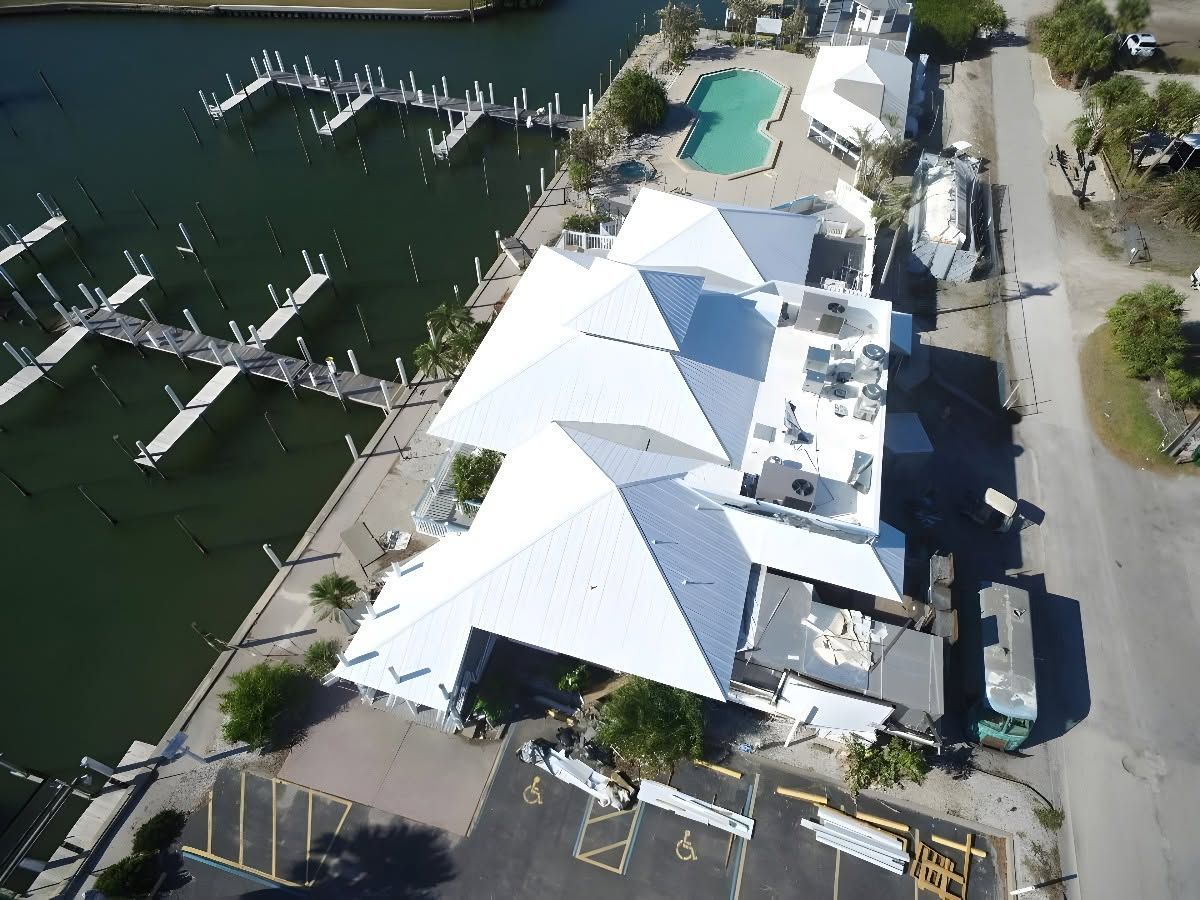
Commercial metal roofing performance depends on panel profile, attachment, seams, clips or fasteners, flashing, movement, drainage, penetrations, corrosion exposure, and the structure beneath it. Straight Forward Construction evaluates the entire system before recommending repair, retrofit, coating, recover, or replacement.
Metal panels expand and contract as temperatures change. The roof has to accommodate that movement while keeping seams, clips, fasteners, closures, edges, curbs, transitions, and penetrations secure. When details restrain movement or rely on failing sealant, recurring leakage and panel damage can follow.
The building use matters too. Coastal-influenced air, industrial contaminants, dissimilar metals, standing water, rooftop equipment discharge, foot traffic, and debris can accelerate corrosion or finish deterioration. A recommendation should reflect those exposures and the actual panel system.

A durable commercial metal roof depends on how the field panels connect to the building and to every opening, edge, and adjoining surface.
Identify panel geometry, seam design, length, slope requirements, clips or direct fasteners, and limitations. Different systems require different repair and replacement approaches.
Evaluate signs of thermal movement, backed-out fasteners, elongated holes, distorted panels, failed clips, seam stress, and details that may be restricting expected expansion.
Review endlaps, sidelaps, ridges, eaves, rakes, transitions, curbs, walls, valleys, penetrations, closures, sealants, and hydrostatic details appropriate to the roof slope.
Document surface oxidation, red rust, galvanic interaction, cut-edge corrosion, chemical exposure, condensate discharge, trapped debris, and coating breakdown before selecting repairs or restoration.
Distinguish roof leakage from condensation risk where possible. Interior humidity, air leakage, vapor drive, insulation condition, ventilation, and panel temperature can all contribute to moisture.
Compare local repair, fastener replacement, seam reinforcement, restoration coating, engineered retrofit, recover options, and full replacement without assuming one path fits every building.

Replacing backed-out screws can help a serviceable exposed-fastener roof, but it does not correct distorted panels, enlarged holes, failed endlaps, incompatible repairs, widespread corrosion, substrate deterioration, or details that cannot accommodate movement. The repair scope needs to address the failure mechanism.
Reasonable when defects are limited, panels and substrate remain sound, compatible replacement components are available, and details can be corrected without creating new movement restrictions.
Consider when failures are widespread, panels are distorted or corroded, attachment is unreliable, leaks recur across seams and penetrations, insulation or substrate is compromised, or geometry and drainage require redesign.
When the correct commercial metal roofing scope is not obvious, document membrane or surface condition, moisture, drainage, attachment, details, and building constraints before committing to repair, restoration, recover, or replacement.
The exact work changes by system and condition, but every useful commercial scope should move from evidence to priorities, controlled execution, and documented closeout.
Document panel profile, attachment, slope, approximate history, leak areas, prior coatings or repairs, exposures, and building operations.
Inspect accessible seams, fasteners, flashings, penetrations, edges, movement clues, corrosion, drainage, and interior evidence.
Define compatible repairs or project options, material requirements, testing, structural input, phasing, safety, and operational controls.
Complete authorized service, restoration, retrofit, or replacement with attention to movement, water paths, dissimilar materials, and weather exposure.
Document completed work, control rooftop traffic and later penetrations, inspect after storms, and address coating or sealant damage early.
Straight Forward Construction serves Auburndale and Central Florida with commercial roofing scopes built around actual roof conditions, occupied spaces, rooftop equipment, access, drainage, scheduling, and long-term ownership goals.
Thermal cycling, panel movement, vibration, installation, substrate condition, washer aging, wind loading, and prior oversized holes may contribute. Replacing screws without evaluating the cause can produce another short-lived repair.
Possibly, if panels and substrate are sufficiently sound, corrosion can be prepared, moisture is controlled, seams and fasteners can be detailed, and the coating is compatible. Coating should not hide unstable metal.
Warm moist air contacting a cooler surface can create condensation. Air leakage, indoor humidity, insulation gaps, vapor-control design, ventilation, and outdoor conditions all matter. It should not automatically be diagnosed as a roof leak.
Some recover or retrofit systems may be possible, but structural capacity, attachment, existing moisture, code, slope, geometry, drainage, penetrations, insulation, and manufacturer requirements must be evaluated.
No system is automatically right for every property. Building use, slope, geometry, budget, expected service life, panel length, detailing, access, and maintenance expectations determine the better fit.
Keep drainage clear, control rooftop traffic, inspect seams, fasteners, penetrations, flashings, sealants, coatings, corrosion, and damage after storms or trade work, and use compatible repair materials.
Schedule an evaluation for evidence-based guidance on metal roof repair, maintenance, restoration, retrofit, or replacement at your Auburndale property.