Deck and Existing Conditions
Confirm deck type, attachment capacity, slope, moisture risk, existing roof condition, code constraints, and whether tear-off or an approved recover approach is appropriate.

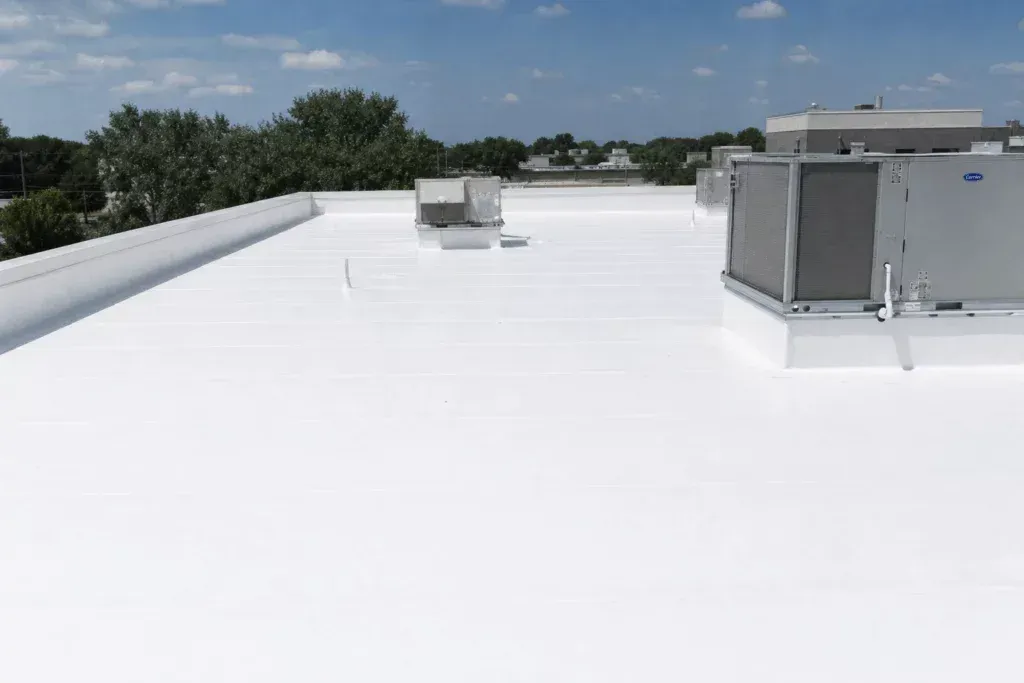
PVC roofing is a heat-welded single-ply system used on many low-slope commercial buildings, especially where grease, oils, chemicals, or rooftop exhaust influence material selection. Straight Forward Construction evaluates the building, membrane, insulation, drainage, attachment, flashings, and operations before defining the scope.
The membrane is only the top layer of a commercial roof assembly. Deck type, vapor conditions, insulation, cover board, attachment method, perimeter securement, membrane thickness, drainage, walk paths, and flashing geometry all affect performance. Product selection without assembly design is incomplete.
PVC is often considered for restaurants, food processing, and buildings with grease or chemical exposure, but compatibility must be confirmed for the actual substances and concentrations involved. Exhaust discharge, maintenance practices, and rooftop cleaning still require control.
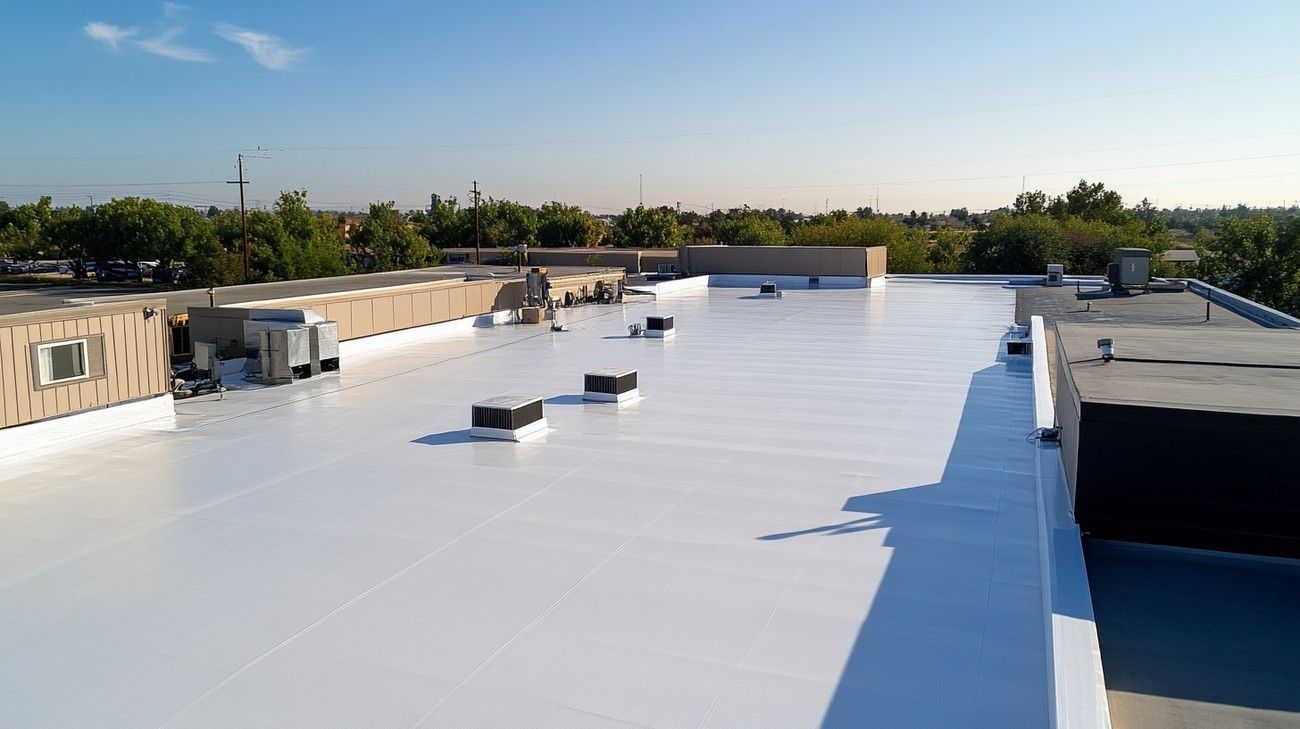
A PVC roof has to resist water, wind, traffic, heat, contaminants, and movement while remaining compatible with the building and its operations.
Confirm deck type, attachment capacity, slope, moisture risk, existing roof condition, code constraints, and whether tear-off or an approved recover approach is appropriate.
Select insulation type and thickness around energy goals, drainage, compressive strength, fastening, equipment, and code. A cover board may improve durability and substrate quality where specified.
Choose an attachment method based on deck, wind design, building height, perimeter zones, substrate, operations, manufacturer requirements, and project logistics.
Control membrane cleanliness, welder settings, ambient conditions, speed, pressure, hand-welded details, seam probing, patches, and corrections throughout installation.
Build reliable inside and outside corners, walls, drains, scuppers, penetrations, pitch pans, equipment curbs, edges, transitions, and walkway protection.
Evaluate exhaust discharge and actual chemical exposure, route service paths, use compatible cleaning and repair methods, and prevent other trades from puncturing or contaminating the membrane.
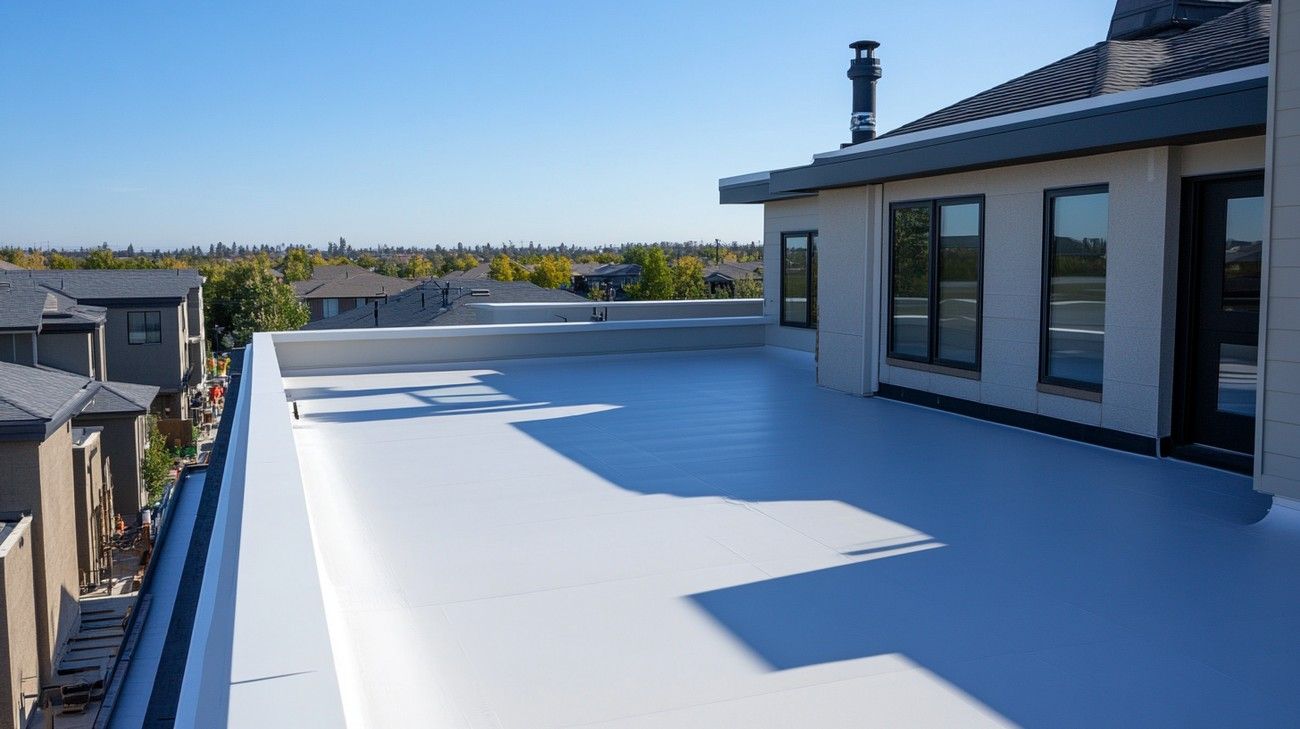
PVC can often accept heat-welded repairs when the membrane remains cleanable, flexible, compatible, and securely supported. Repair becomes harder when plasticizer loss, contamination, widespread moisture, shrinking details, repeated incompatible patches, failing insulation, or substrate problems extend beyond an isolated area.
Appropriate when the defect can be isolated, surrounding membrane remains weldable and serviceable, wet materials can be addressed, and compatible components are available.
Consider when deterioration or moisture is widespread, adhesion or attachment is unreliable, membrane cannot accept durable welds, drainage and insulation need redesign, or repairs no longer support the ownership plan.
When the correct pvc roofing scope is not obvious, document membrane or surface condition, moisture, drainage, attachment, details, and building constraints before committing to repair, restoration, recover, or replacement.
The exact work changes by system and condition, but every useful commercial scope should move from evidence to priorities, controlled execution, and documented closeout.
Review operations, exhaust, contaminants, deck, existing roof, drainage, leaks, moisture clues, traffic, access, and ownership horizon.
Define tear-off or approved recover, attachment, insulation, cover board, membrane, flashings, edges, walkways, phasing, and protection.
Address included wet or unsound materials, establish a clean substrate, coordinate curbs and penetrations, and protect the building.
Place assembly layers, secure field and perimeter areas, heat-weld seams and details, and perform ongoing quality checks.
Inspect details, probe included seams, address punch work, clean the roof, and provide included project and maintenance information.
Straight Forward Construction serves Auburndale and Central Florida with pvc roofing scopes built around actual roof conditions, occupied spaces, rooftop equipment, access, drainage, scheduling, and long-term ownership goals.
PVC is polyvinyl chloride, a thermoplastic single-ply roofing membrane. Sheets and accessories are commonly joined with hot-air welding to create continuous waterproof details.
No. It is used on many low-slope commercial buildings. Restaurants and facilities with certain grease or chemical exposures may consider PVC, but actual compatibility and the full roof assembly still need evaluation.
Sometimes, subject to code, manufacturer requirements, deck capacity, existing layers, moisture, attachment, slope, drainage, compatibility, and substrate preparation. Recover should not be used to hide wet or failed materials.
After diagnosis and preparation, compatible PVC patches or detail components may be heat welded to serviceable membrane. Contamination, aging, moisture, or incompatible prior repairs can complicate the work.
Reflectivity can reduce roof-surface heat gain, but total building energy use depends on insulation, HVAC, air leakage, operations, climate, and roof condition. Avoid promising a specific utility reduction without analysis.
Keep drainage clear, control grease and chemical discharge, use designated walk paths, inspect seams and flashings after storms and rooftop work, and require compatible repairs by qualified personnel.
Request a PVC roofing evaluation that considers membrane selection, the complete assembly, rooftop exposure, drainage, installation details, and long-term serviceability.