Gutter Size & Roof Area
Match the system to contributing roof area, pitch, rainfall intensity, valley discharge, and long runs. Concentrated runoff may require larger components or more outlets.



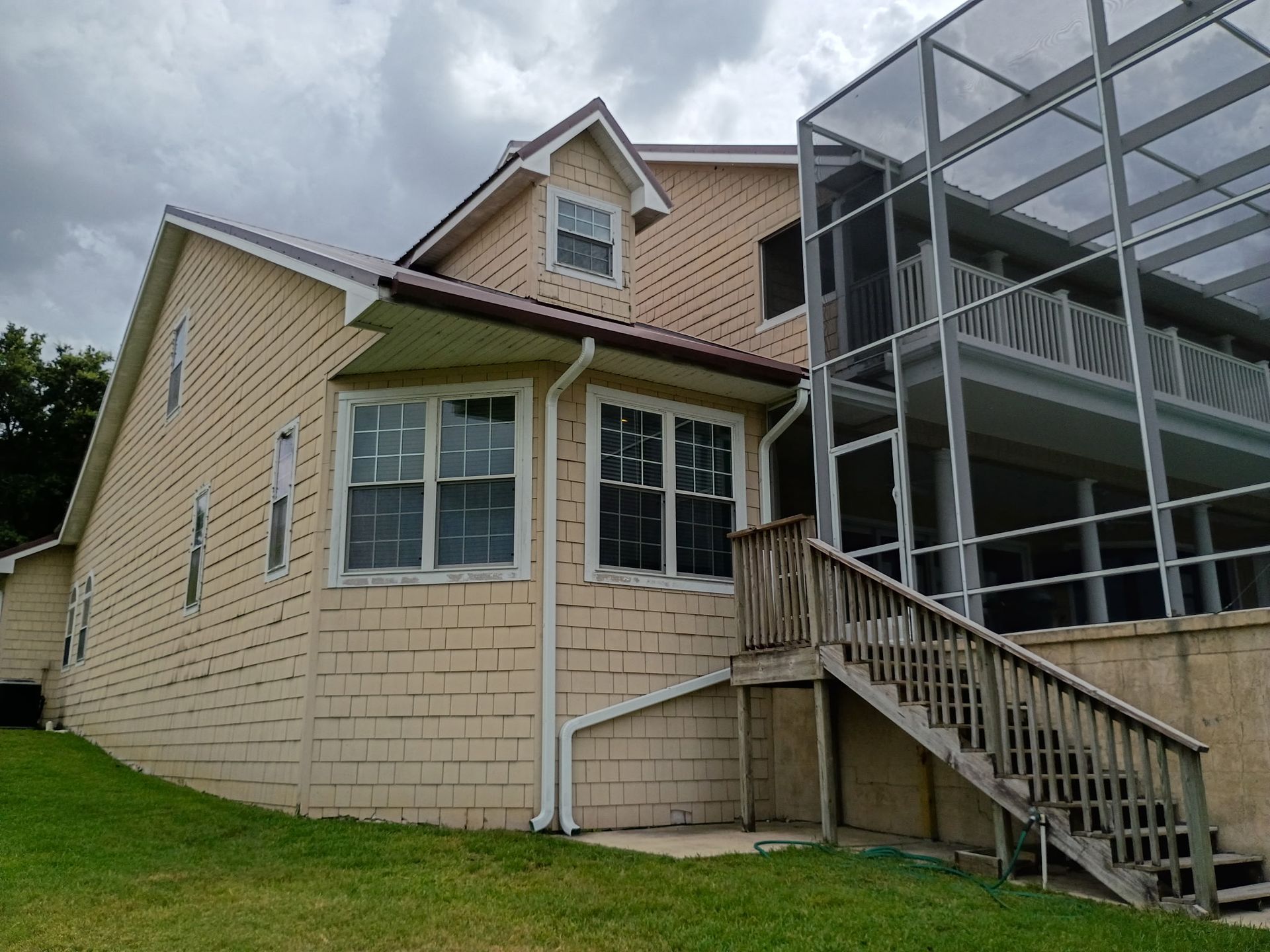
Move roof runoff away from fascia, walls, entries, landscaping, and the foundation with a gutter system planned around the actual roof—not a one-size-fits-all layout.
Continuous gutter runs reduce unnecessary seams, but seamless does not mean maintenance-free or leak-proof. Performance still depends on capacity, pitch, outlets, attachment, clear downspouts, and useful discharge locations.
Florida downpours expose weak layouts quickly. Straight Forward Construction plans the system around roof area, valleys, long runs, inside corners, tree cover, fascia conditions, and the drainage conditions around the building.

The gutter, outlets, downspouts, elbows, extensions, roof edge, and surrounding grade have to work together. These are the decisions that matter most.
Match the system to contributing roof area, pitch, rainfall intensity, valley discharge, and long runs. Concentrated runoff may require larger components or more outlets.
Establish controlled slope toward properly located outlets. Poor pitch leaves standing water, while too few outlets can overwhelm long runs during heavy rain.
Check visible fascia and choose suitable attachment spacing. New gutters should not be used to hide rotten, loose, or unreliable edge material.
Route downspouts around doors, walkways, equipment, and architectural features while keeping the discharge path practical and maintainable.
Address corners, end caps, miters, roof valleys, kickout areas, and drip-edge relationships where runoff can overshoot or move behind the gutter.
Choose a finish that fits the building, but do not let appearance override capacity, access, fastening, or the number and location of downspouts.
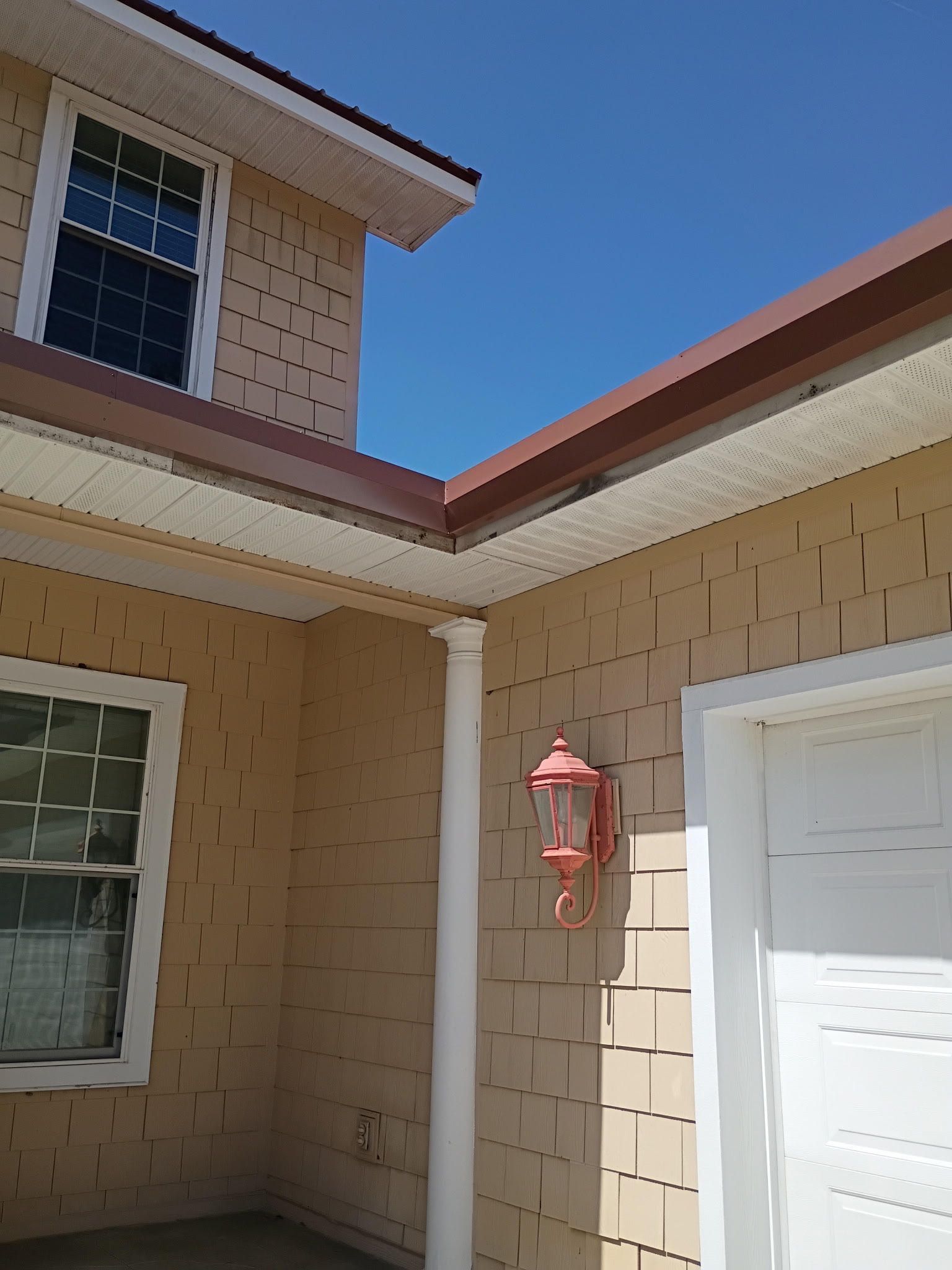
A leaking end cap or loose hanger may be repairable. Repeated overflow, widespread corrosion, poor pitch, undersized runs, failing fascia, separated corners, or a layout that sends water to the wrong place can justify a larger correction.
Fits a generally sound system with an isolated loose section, failed seal, hanger, outlet, end cap, or minor alignment problem.
Fits a localized run with poor pitch, damaged sections, inadequate outlets, or a downspout route that can be corrected without replacing everything.
Fits widespread failures, inadequate capacity, unreliable attachment, major damage, or a drainage layout that needs to be redesigned.
Measure first, plan the water path, form the runs, install the complete system, and review where every outlet discharges.
Review roof edges, fascia, runoff concentration, existing drainage, access, and the reason for installation or replacement.
Determine run lengths, size, pitch direction, outlets, downspouts, colors, and practical discharge points.
Produce continuous sections for the measured runs and prepare corners, end caps, outlets, and supporting components.
Attach gutters, connect downspouts, seal required joints, and complete the included edge and transition details.
Check alignment, attachment, outlet routes, discharge areas, cleanup, and maintenance considerations.
Straight Forward Construction is based in Auburndale and has served customers since 2018 with plain-English recommendations and property-specific exterior plans.
A useful gutter proposal should define the profile, material, color, run locations, outlets, downspouts, attachment approach, discharge plan, included edge work, cleanup, exclusions, and how hidden fascia damage or added work will be handled.
Work with a roofing contractor whose business is rooted in the same Central Florida community it serves.
Know what is included, where downspouts will discharge, and how hidden fascia conditions or added work will be handled.
The main horizontal runs are formed in continuous lengths for the building, reducing joints along straight eaves. Corners, end caps, outlets, and downspout connections still require sealed connections.
No. They reduce unnecessary field seams, but leaks can still develop at corners, end caps, outlets, damage points, or failed seals. Debris and poor pitch can also cause overflow that looks like a leak.
That depends on roof area, run length, pitch, valley concentration, gutter size, rainfall, and available discharge locations. Long or high-volume runs may need multiple outlets.
Damaged or unreliable fascia should be addressed before expecting secure attachment. The correct repair scope depends on the visible condition and how the existing roof edge is built.
They help control roof runoff, but discharge extensions, grading, drains, soil conditions, and other site factors also matter. Gutters cannot solve every groundwater or site-drainage issue alone.
Cleaning frequency depends on nearby trees, roof debris, storms, insects, and the gutter or guard design. Inspect the system after major weather and whenever overflow, staining, or slow drainage appears.
Schedule a gutter evaluation for a system planned around your roof edges, runoff volume, downspout routes, and the actual discharge conditions at your Auburndale property.