


Modified Bitumen Roofing in Auburndale, FL
Layered protection starts with a complete roof assembly. Compare modified bitumen options for your low-slope roof with clear answers about materials, installation, repairs, and maintenance.
Conceptual assembly, not an installation detail. Layer count, attachment, materials, and drainage must follow the project specification.
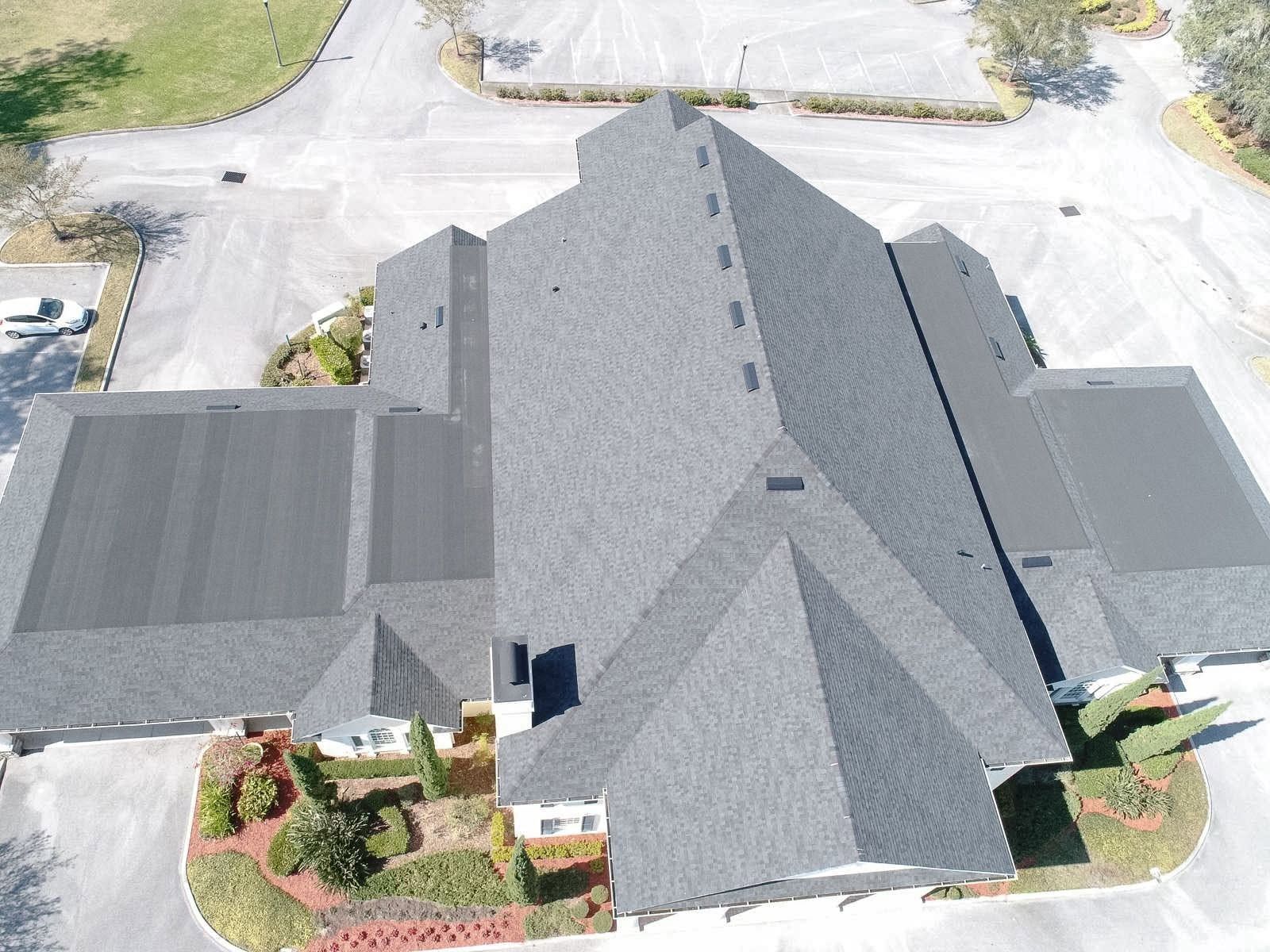
Modified bitumen is asphalt roofing enhanced with polymers and reinforcement. It is used in low-slope roof assemblies that combine specified base layers, a weathering surface, flashing, attachment, and drainage details.
More than a roll of roofing
A durable modified bitumen roof depends on the entire assembly. The deck must provide a suitable foundation. The selected base and cap materials must work together. Seams, edges, drains, and wall transitions must be detailed for the system. The finished roof also needs a practical maintenance plan, especially where equipment service creates regular traffic.
Straight Forward Construction evaluates modified bitumen roofing for homes and commercial properties in Auburndale and Central Florida. Whether the project involves an older low-slope addition or a larger building, the scope should identify the exact assembly and the reasons it fits. “Modified bitumen” by itself is not enough information to compare two estimates.
Know what is actually being specified
SBS and APP modifiers
SBS and APP are different polymer families used in modified asphalt membranes. Their properties and approved applications vary by product. Choose the manufacturer’s specified system rather than treating all modified bitumen sheets as equivalent.
Base layers and cap sheet
Reinforcement, base layers, and the exposed cap surface serve different functions. A specified multi-ply system should identify each component, the substrate it attaches to, and the method used to join it.
Installation method
Depending on the product, application can involve self-adhered membranes, approved adhesives, hot asphalt, or heat application. The selected method must suit the assembly and the building. Not every modified bitumen roof is torch-applied.
Surfacing and exposure
Granulated, reflective, or other specified surfaces have different characteristics and care requirements. Surface appearance alone does not establish remaining service life or confirm that the layers underneath are dry and secure.
The details decide whether the roof stays serviceable
Ask the contractor to explain how the membrane terminates at walls, meets the perimeter edge, connects to drains, and wraps penetrations. A neat-looking field area is only part of the job. Changes in elevation, small roof sections, curbs, and connections to a steeper roof all need specific treatment. These locations should appear in the written scope rather than being left to assumption.
Existing patches deserve attention as well. Different coating and repair products can affect the next repair. An evaluation should account for the current surface, previous work, suspected moisture, and any loose or deteriorated areas. When conditions cannot be confirmed visually, discuss the purpose and limits of additional investigation before agreeing to a broad repair or restoration plan.
Build the scope around the condition
The right choice should be supported by findings you understand. Open each option to see what belongs in the conversation.
A proposal should explain the work, its limits, and how discoveries will be handled before the project begins.
Repair a defined defect
Localized damage or a failed detail may be repairable if the surrounding assembly is sound and compatible repair materials can be used. The scope should identify the affected area and the intended repair boundaries.
Evaluate restoration carefully
A coating may be considered only after reviewing substrate condition, compatibility, adhesion, drainage, and moisture. Repairs and preparation remain part of the work; a new finish cannot make failed underlying materials reliable.
Replace an exhausted assembly
Recurring failures, extensive deterioration, unreliable attachment, or widespread moisture can make replacement the better use of the budget. The proposal should show how the new assembly corrects the weaknesses found during evaluation.
A clear path through the project
- 01
Listen
Describe the property, leak history, previous work, and what you want to accomplish. Include access restrictions and timing concerns.
- 02
Evaluate
Review the roof and relevant details. Separate observed conditions from concealed issues that may require further investigation.
- 03
Explain
Compare the practical options, their limitations, and the work each one includes. Put the selected scope and change process in writing.
- 04
Coordinate
Plan access, property protection, materials, and work sequencing around the agreed project. Address scheduling changes and discoveries as they arise.
- 05
Complete
Review the agreed work, cleanup, remaining maintenance needs, and applicable project documentation. Keep the written terms for future reference.
 Straight Forward Construction
Plan the work around the property
For an occupied home, roof work affects access, noise, pets, and protection of interior spaces. For a business, it also affects tenants, equipment service, parking, and operating hours. Share those constraints early. A useful proposal sets expectations for project sequencing, changing weather, concealed conditions, and communication while the work is underway.
Related roofing services
Find more detail about the service, material, or nearby coverage that fits your project.
Modified bitumen roofing questions
Is modified bitumen the same as basic rolled roofing?
No. Modified bitumen uses polymer-modified asphalt and reinforcement in a specified roof system. The number of layers, attachment, flashing, and application details matter. Compare the actual assembly rather than relying on the fact that the material arrives in rolls.
Does modified bitumen always require a torch?
No. Self-adhered and other approved application methods are available for certain products. The correct method depends on the manufacturer’s system and job conditions. Ask which method is included in your proposal and why it was selected.
Is modified bitumen only for commercial buildings?
No. It can be considered for suitable residential low-slope areas as well as commercial roofs. Roof geometry, drainage, substrate, connections to other roof systems, and the specified assembly determine whether it fits the application.
How long should a modified bitumen roof last?
Service life varies with the product, assembly, installation, drainage, exposure, maintenance, and previous damage. A roof-specific condition evaluation is more useful than assigning a guaranteed lifespan from a product category or age alone.
Can you repair a blister or an open seam?
A professional should evaluate its cause, extent, and surrounding condition before selecting a repair. Moisture, adhesion, substrate issues, or aging may change the scope. Cutting or covering a visible symptom without diagnosis can leave the underlying problem in place.
Is modified bitumen better than TPO?
Neither is automatically better. Compare the building’s needs, assembly design, available installation methods, traffic, maintenance, repair strategy, and budget. Ask for reasons tied to your property rather than a blanket claim about one material.
Get a clear answer about your roof.
Tell us the property location, what you are seeing, and what you want to accomplish. We will help you identify the next practical step.