


Flat Roofing in Auburndale, FL
A flat roof needs a plan for every drop of water. Get practical repair and replacement options that connect the membrane, drainage, flashing, and structure underneath.
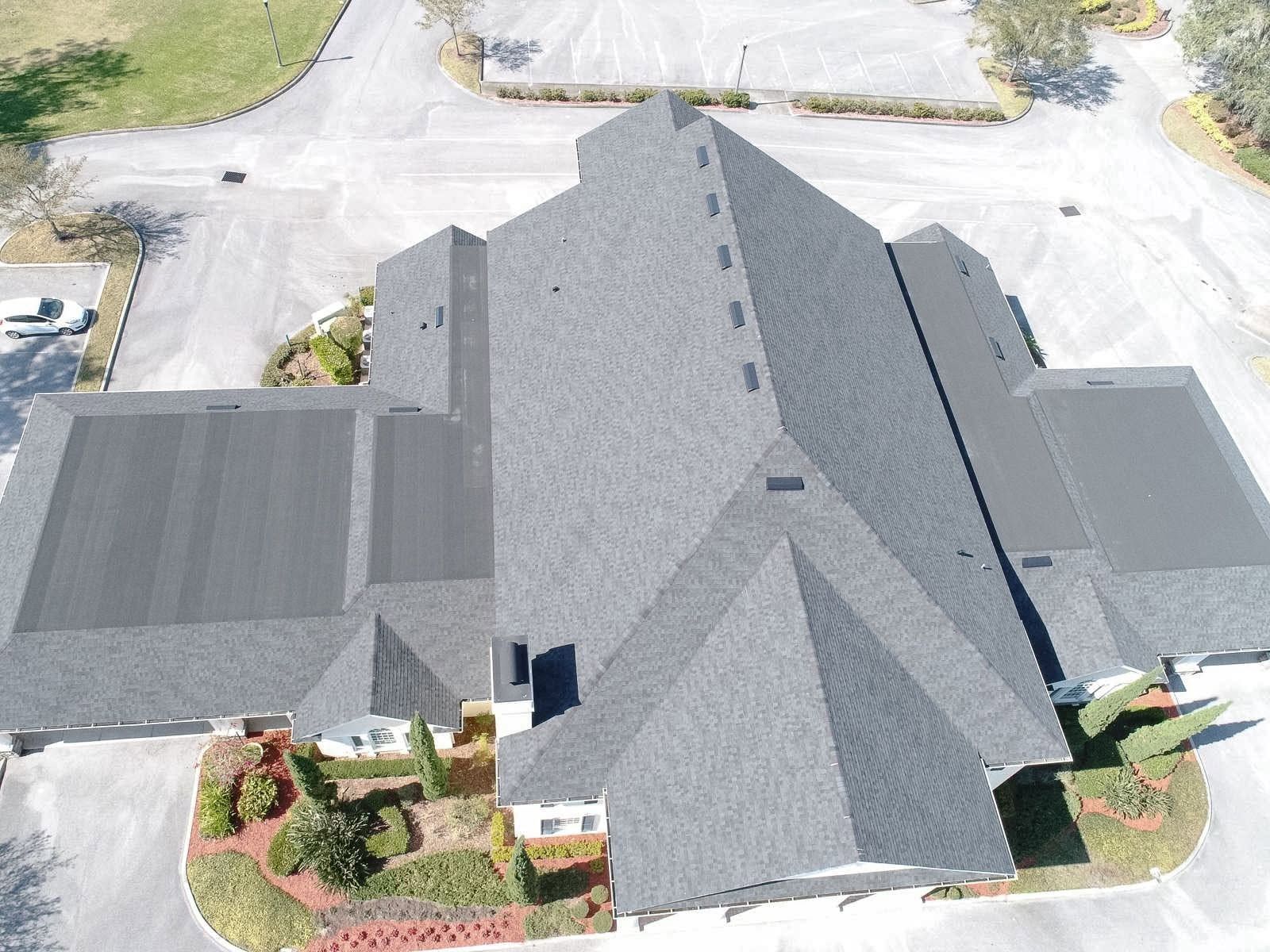
“Flat roofing” describes a low-slope roof shape, not a single material. A successful roof uses a compatible waterproofing system and a designed path for water to reach drains, scuppers, or gutters.
Start with the roof. Then choose the system.
A porch roof, home addition, office building, and retail center can all have low-slope roofing, but they do not necessarily need the same assembly. The roof deck, existing layers, equipment, insulation, access, and drainage determine which options are realistic. Choosing a membrane before examining those conditions can leave the most important problems untouched.
Straight Forward Construction helps property owners in Auburndale and throughout Central Florida evaluate flat roof leaks, aging surfaces, and replacement projects. The first question is whether the existing assembly can support a durable repair. When it cannot, the replacement scope should explain what is being removed, what is being rebuilt, and how the new roof will shed water.
Four details that deserve more attention
Drainage and low spots
Standing water deserves investigation. Blocked outlets, depressed insulation, deck movement, and insufficient slope require different corrections. A fresh surface alone does not change the roof’s geometry.
Seams and transitions
Membrane laps, wall flashings, pipe penetrations, and changes between roof slopes are common places to investigate. Repair materials must be compatible with the existing system and the detail being corrected.
Moisture below the surface
A roof can look reasonably intact while water remains in insulation or other concealed materials. Findings may call for additional investigation before deciding whether a coating, recover, or replacement is appropriate.
Edges and attachment
Wind performance depends on more than the broad roof surface. Perimeter metal, corners, wall terminations, and the attachment to the deck belong in the scope from the beginning.
Compare flat roofing options by what your building needs
TPO and PVC are single-ply membrane options with heat-welded seams. Modified bitumen uses reinforced asphalt-based sheets in a specified assembly. Coatings may be useful on an eligible existing roof after condition, compatibility, adhesion, and moisture have been evaluated. These choices are not interchangeable, and a coating is not a shortcut around damaged substrate or persistent drainage problems.
Ask how each proposed option handles foot traffic, rooftop equipment, existing transitions, maintenance, and future repairs. For a residential addition, the connection to the main roof can be as important as the field membrane. For a commercial building, access to drains and equipment should remain practical after the work is complete.
Repair, restore, or replace?
The right choice should be supported by findings you understand. Open each option to see what belongs in the conversation.
A proposal should explain the work, its limits, and how discoveries will be handled before the project begins.
Targeted repair
An isolated defect may be repairable when adjacent material, attachment, and underlying components remain sound. The repair should correct the source and extend far enough to reach reliable material.
Restoration evaluation
A coating or other restoration approach needs a sound, suitable substrate. Wet areas, loose materials, open details, and drainage concerns must be addressed before an eligible restoration system is specified.
Replacement planning
Widespread deterioration, repeated failures, extensive trapped moisture, or an assembly that cannot be reliably repaired can justify replacement. Use the project to address drainage and details, not simply cover them again.
A clear path through the project
- 01
Listen
Describe the property, leak history, previous work, and what you want to accomplish. Include access restrictions and timing concerns.
- 02
Evaluate
Review the roof and relevant details. Separate observed conditions from concealed issues that may require further investigation.
- 03
Explain
Compare the practical options, their limitations, and the work each one includes. Put the selected scope and change process in writing.
- 04
Coordinate
Plan access, property protection, materials, and work sequencing around the agreed project. Address scheduling changes and discoveries as they arise.
- 05
Complete
Review the agreed work, cleanup, remaining maintenance needs, and applicable project documentation. Keep the written terms for future reference.
 Straight Forward Construction
Flat roof help for homes and working buildings
From low-slope additions in Auburndale to commercial properties in Lakeland, Winter Haven, and surrounding Central Florida communities, the roof should be evaluated as part of the building. Tell us about leaks, access restrictions, rooftop units, previous repairs, and any spaces that must remain in use. Photos and a history of when water appears help focus the evaluation.
Related roofing services
Find more detail about the service, material, or nearby coverage that fits your project.
Flat roofing questions, answered
Is a flat roof supposed to be completely level?
No. The term usually describes a low-slope roof. Water still needs a deliberate path to an outlet. The appropriate slope and drainage approach depend on the roof assembly, building conditions, and applicable project requirements.
What is the best material for a flat roof in Florida?
There is no universal winner. Compare membrane options against the deck, drainage, building use, installation details, maintenance needs, and budget. A well-chosen system can still fail if the transitions or attachment are poorly executed.
Can you repair a flat roof without replacing all of it?
Sometimes. A limited seam, flashing, or puncture problem may support a localized repair. The surrounding roof and concealed materials must be in suitable condition; the visible size of a ceiling stain does not establish the repair size.
Will a coating fix standing water?
A coating does not create slope or move a misplaced drain. Some products permit particular exposure conditions, but the drainage issue and the product’s limitations still need to be evaluated. Do not treat ponding as a surface-only problem.
Can a flat roof be installed over the old roof?
A recover may be possible on some buildings, but it requires evaluation of existing layers, moisture, attachment, structure, compatibility, and project requirements. Unsound or wet materials should not simply be hidden under another system.
How do I keep a low-slope roof in good condition?
Arrange professional inspections, keep drainage paths clear, and have the roof checked after damaging weather or rooftop equipment work. Limit unnecessary foot traffic and have new penetrations coordinated with the roofing system.
Get a clear answer about your roof.
Tell us the property location, what you are seeing, and what you want to accomplish. We will help you identify the next practical step.