See Where the Roof Sends Water
Valleys, large roof planes, and concentrated flow areas can send more water to certain sections. Those areas deserve attention when the gutter layout is planned.



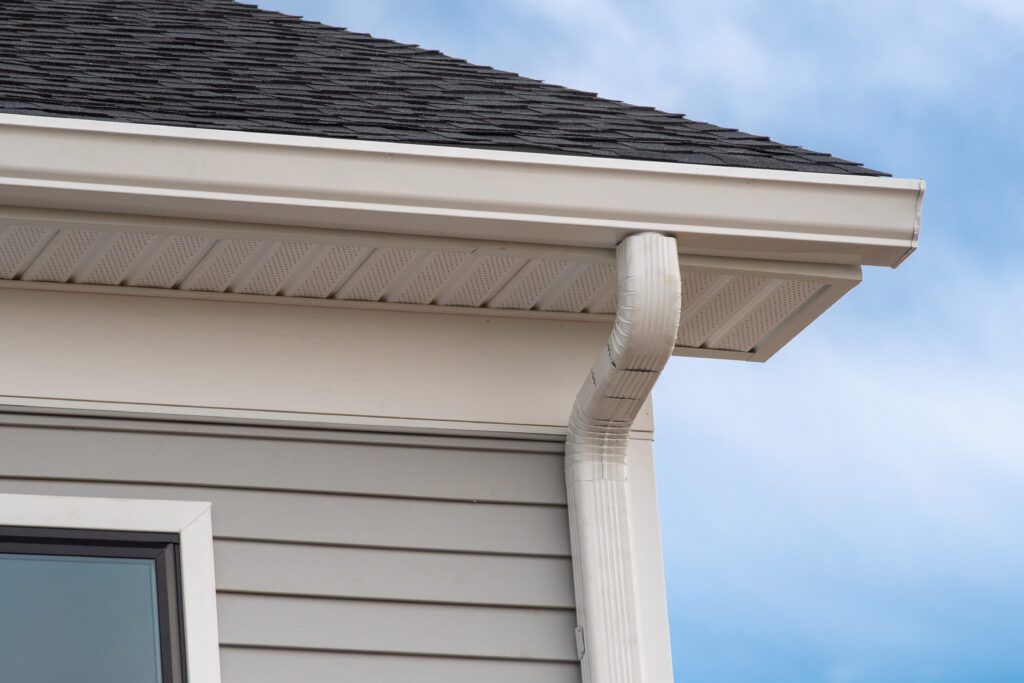
Florida downpours can send a large amount of water off a roof in a short time. If gutters overflow, pull away, leak at joints, or dump water beside the building, the drainage setup may need attention. Straight Forward Construction provides seamless gutter solutions for Riverview, FL properties, with custom-fitted sections, planned pitch, and downspout placement intended to move roof runoff away from vulnerable areas.
The goal is simple: collect water from the roof and send it to a suitable discharge point. The details decide whether that happens well.
One long roof edge may need a different gutter plan from a short section below a valley that receives concentrated runoff. A downspout beside a walkway can create a nuisance even when the gutter itself works. We look at where water comes off the roof, how the eaves are arranged, and where each downspout can drain. Seamless gutter runs reduce the number of field joints, but sizing, pitch, attachment, outlets, and discharge still need to fit the property.

A gutter project involves more than forming a long metal trough. The roof edge, water volume, gutter pitch, outlets, downspouts, and discharge locations all have to work together.
Valleys, large roof planes, and concentrated flow areas can send more water to certain sections. Those areas deserve attention when the gutter layout is planned.
Seamless gutters are formed to suit the measured roof edge. Corners, end points, transitions, and obstacles still need accurate layout before installation.
The run needs enough slope to carry water toward the downspout without looking visibly out of level or leaving water sitting in low areas.
Downspout size and location should match the amount of runoff and the available discharge area. Crowded corners or poor discharge points may need a different layout.
Attachment spacing and the condition of the mounting area matter. A gutter carrying rainwater needs stable support along the full run.
The finished layout should direct water through the gutter and downspouts without obvious low spots, poor connections, or discharge into an unsuitable area.

Straight Forward Construction offers custom-fitted seamless aluminum gutters and may provide copper or steel options for qualifying projects. Six-inch gutter systems can also be considered where more water capacity is needed. The right choice depends on the roof edge, expected runoff, appearance goals, and how the downspouts can be routed around the property.
Aluminum is a common choice for custom-fitted gutters because it can be formed in long runs and is available in finishes that work with many home exteriors.
Larger gutter sizing may help on roof areas that collect more runoff, but size alone does not fix poor pitch, limited outlets, or a bad discharge location.
Guard options can reduce some debris entering the gutter. They do not remove the need to check roof valleys, outlets, downspouts, and drainage after storms or leaf buildup.
A good layout starts by looking at the roof and the ground together. We consider where the water arrives, how it will move through the gutter, and where the downspout can release it without creating another drainage issue.
Point out overflow spots, ponding near the building, washed landscaping, leaks, or places where existing gutters have pulled away.
We review gutter runs, corners, valleys, outlet locations, and practical downspout routes around the home or commercial property.
Gutter size, material, downspout placement, and optional debris-control features are discussed based on the property and the water path.
The seamless sections are formed and attached, then outlets and downspouts are connected according to the planned drainage route.
Connections, visible pitch, outlet areas, and discharge points are checked so you understand how the system is intended to handle roof runoff.
Riverview can see sudden, intense rain during the warmer months. A gutter that seems adequate in light rain may overflow quickly when a large roof area or valley sends water into one short section.
Local conditions make drainage planning especially important. Strong sun can age sealants and exterior materials, storms can drop leaves and small debris, and repeated heavy rain can reveal low spots or undersized outlets. The answer is not always a bigger gutter. The roof shape, run length, outlet count, downspout route, and the ground where water is released all need to work together.
Straight Forward Construction serves Tampa Bay project requests and provides seamless gutter services as part of its exterior work. Tell us where water is overflowing or collecting at your Riverview property and what the current gutter setup looks like.
Total gutter length, number of corners, building height, material choice, gutter size, downspout count, access, removal of old gutters, and debris-control options can all affect the project. The final layout should be based on the actual roof edge and drainage needs.
A seamless gutter run is formed in a long continuous section for the measured roof edge, which reduces the number of joints along straight runs. Corners, outlets, end caps, and downspout connections still require sealed connections.
Frequent overflow can be a clue, but it does not prove size is the only issue. Clogs, poor pitch, too few outlets, concentrated flow from valleys, or bad downspout placement can cause similar symptoms. The full drainage path should be checked before changing size.
They should release water where it can move away from vulnerable areas without creating a problem at doors, walkways, landscaping, walls, or neighboring sections of the property. The best location depends on the site and existing drainage.
No. Guards can reduce some debris, but leaves, seeds, roof granules, and storm debris can still collect on top or reach openings and outlets. Periodic checks are still useful, especially after severe weather.
Yes, gutter work can be discussed alongside a roofing project. Coordinating the roof edge, fascia condition, drip path, and new gutter layout can help avoid doing the same exterior work twice.
Long runs, multiple stories, many corners, difficult access, removal of old materials, premium metals, larger gutter sizes, additional downspouts, and guard options can all add labor or material. A site-specific measurement is the best way to define the work.
If roof runoff is overflowing, washing out landscaping, or collecting too close to your Riverview property, Straight Forward Construction can review the gutter layout and discuss a seamless system that fits the building and drainage path.