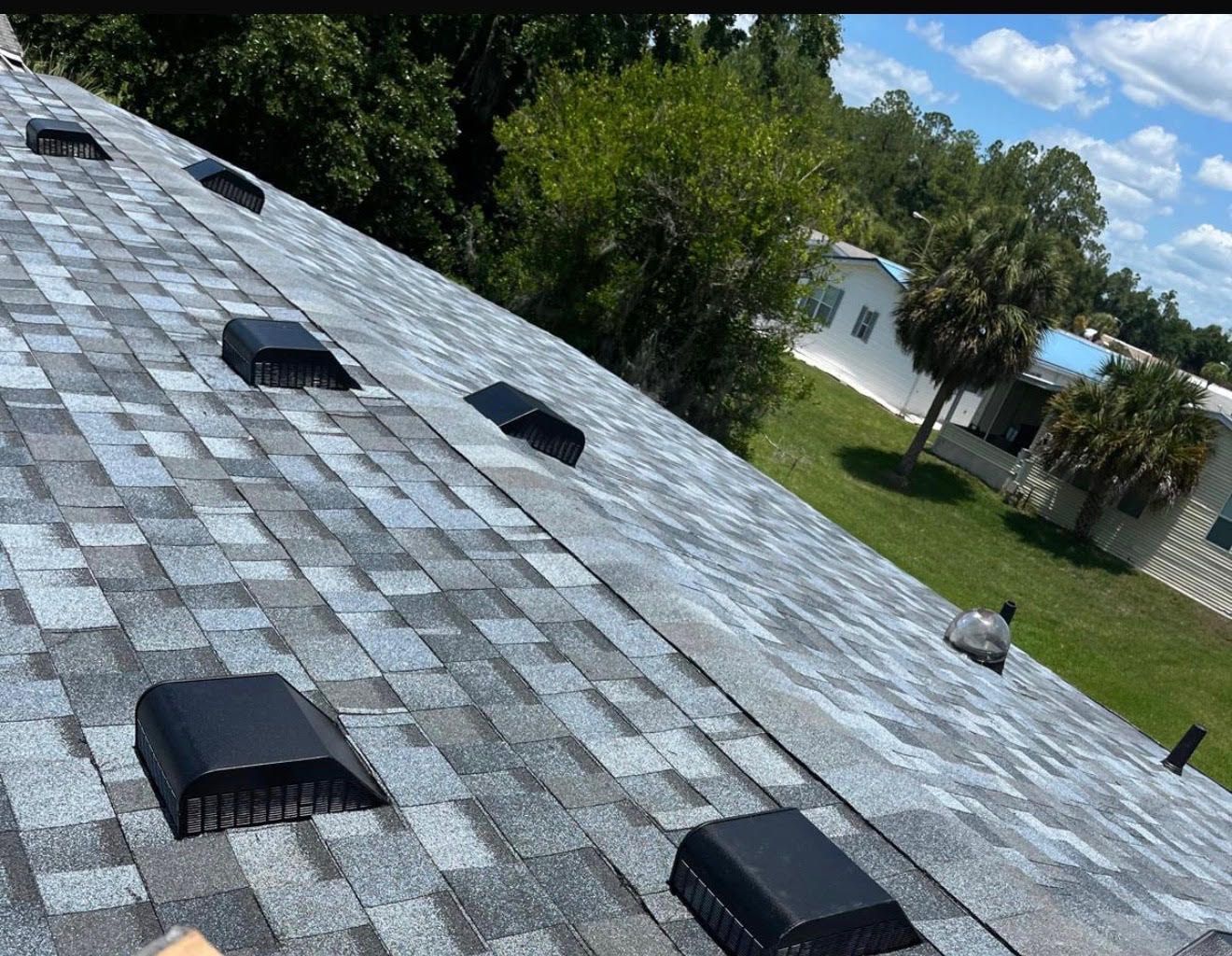

Roof Installation: A Florida Homeowner’s Guide
From the first inspection to the final walkthrough: understand the materials, cost decisions, and work behind a properly planned roof installation.
CENTRAL FLORIDA ROOFING
The quick answer
A roof installation is a coordinated system of decking, water-shedding layers, flashing, roof covering, and ventilation where applicable. For a replacement, the process also includes removal of the old roof and review of the exposed deck. The final price and schedule depend on the actual roof, selected system, permit requirements, access, and conditions discovered during the work.
Start with the condition of the existing roof
Before choosing a shingle color, find out what the property needs. An isolated leak may call for a targeted repair. Widespread deterioration, repeated failures, or a system that can no longer accept a dependable repair may point toward replacement. Age is useful context, but it should not replace an inspection.
Ask for photos and an explanation of the findings. The assessment should distinguish visible defects, likely hidden conditions, and items that cannot be confirmed until the old materials are removed. That distinction makes the estimate more useful and the conversation more honest.
Explore roof replacement or new construction roofing for the service that fits your project.
Choose a system that fits the roof
Material choice starts with slope, structure, drainage, architectural goals, and budget. A steep main roof and a low-slope porch may require different systems on the same house. The visible covering is only part of the specification.
| Roofing system | What to compare | Questions for your estimate |
|---|---|---|
| Asphalt shingles | Product line, appearance, complete accessory package, and installation requirements. | Which shingles, starter, underlayment, ridge components, and flashing details are included? |
| Metal roofing | Panel type, fastening method, finish, and transition details. | Is the proposed system concealed-fastener or exposed-fastener, and what maintenance does it require? |
| Tile roofing | Tile type, structural suitability, underlayment, and attachment. | Is the structure suitable for the selected tile, and how are valleys and penetrations handled? |
| Low-slope roofing | Slope, drainage, membrane or assembly selection, and penetrations. | Which system is appropriate for this specific roof area and its drainage conditions? |
A product’s warranty period is not a prediction of how long every roof will last. Exposure, installation, maintenance, and the condition of the supporting components all matter. Ask for the written warranty and the actual product specification before committing.
What a complete installation estimate should include
“Replace roof” is not enough detail to compare proposals. You need to know what is included, what is excluded, and what happens if the exposed deck needs additional work. The estimate should be specific enough that two people reading it understand the same project.
- Measurements and scope: Roof areas included, existing layers to remove, access, and disposal.
- Decking: Inspection, any included allowance, extra-work unit pricing, and authorization procedure.
- Roofing layers: Named underlayment and roof-covering products with the appropriate accessories.
- Water-management details: Valleys, walls, penetrations, perimeter flashing, and gutter coordination.
- Ventilation: The plan for intake and exhaust where the roof and attic assembly require it.
- Administration and closeout: Permits, inspections, property protection, cleanup, and warranty documents.
For a closer look at proposal differences, use our Auburndale roofing cost and estimate guide.
The roof installation process, step by step
1. Inspection, scope, and material decisions
The contractor evaluates the property, measures the roof, discusses options, and documents the agreed work. Resolve product choices, exclusions, payment terms, and how additional work will be handled before the crew arrives.
2. Permits, deliveries, and property protection
Coordinate the required permit process, material delivery, equipment placement, and access. The City of Auburndale lists reroofing among work requiring a construction permit. The correct permitting authority depends on the property’s jurisdiction, not just its mailing address.
3. Removal and exposed-deck review
On a tear-off replacement, old roofing is removed so the exposed deck can be evaluated. Damaged or unsuitable areas need attention before the new assembly is installed. Any additional scope should be documented and handled through the agreed change process.
4. Water-shedding layers and critical transitions
Underlayment, edge metal, and flashing details are coordinated with the selected system. Valleys, walls, pipe penetrations, and roof edges deserve close attention because the roofing has to change direction or meet another material at these locations.
5. Roof covering and finish components
The shingles, panels, tile, or membrane are installed according to the applicable requirements. Ridge details, caps, penetrations, and ventilation components are completed as the assembly requires. Read our drip-edge guide for a closer look at the perimeter.
6. Cleanup, inspections, and handoff
The project should end with debris removal, a review of completed work, required inspection closeout, and the relevant paperwork. Ask how to report a concern and what maintenance is expected for the selected roof system.
How long does a roof installation take?
Separate the total project schedule from the days a crew is physically roofing. Inspection, product selection, permitting, material availability, and scheduling all happen before installation. Final inspections or paperwork may continue after the last roof material is in place.
A straightforward shingle project can have a shorter active installation period than a complex tile or metal roof. Steeper slopes, multiple roof levels, extensive decking repairs, and limited access add work. Your contractor should give a project-specific installation window rather than a promise based only on the home’s interior square footage.
What drives the installed price?
A material price is not a roof installation price. The complete project also involves labor, tear-off where applicable, disposal, underlayment, flashings, accessories, access, and administrative work. A quote that excludes those pieces can look inexpensive while describing a different job.
Roof surface area also differs from living area. Pitch, overhangs, attached garages, porches, and multiple levels affect the measurement. A roofing square is 100 square feet of roof area. Ordering quantities can include additional material for cuts and waste; ask whether the figure shown is measured area or material quantity.
Compare proposals using the same system and scope. Confirm the allowance for decking repairs and the unit price beyond it. A realistic plan for concealed conditions is more useful than a blanket promise that no unexpected work can occur.
How to prepare your home
- Move vehicles away from the work and delivery areas before the crew arrives.
- Relocate patio furniture, planters, and other movable items near the house.
- Arrange a safe place for children and pets away from equipment and debris.
- Discuss access to gates, driveways, and any shared spaces.
- Secure fragile interior items that may be affected by vibration.
- Ask whether stored attic belongings need protection from dust.
- Coordinate solar panels, satellite equipment, or other roof-mounted equipment in advance.
Ask the contractor to explain daily cleanup and how the home will be protected if weather changes. If you work from home, plan for substantial noise during removal and fastening.
What to check before calling the project complete
Review the finished scope, including any approved additions. Keep your proposal, change orders, paid invoice, product information, photos supplied by the contractor, and warranty documents together. Confirm any required registration and the status of the final inspection.
Manufacturer coverage and contractor workmanship coverage are different. Ask who handles each type of issue, what is excluded, and whether any transfer requirements apply. A verbal promise should not substitute for the written terms.
Straight Forward Construction helps Central Florida property owners compare the options and understand the work behind the estimate. Start with a roof inspection and a clear explanation of the property’s condition.
Frequently asked questions
What is included in a roof installation?
The exact scope depends on the system. A complete proposal should identify the deck review, underlayment, flashing, roof covering, accessories, ventilation where applicable, cleanup, permit responsibilities, and warranty terms. Replacement also needs a clear plan for existing materials.
Does roof replacement require all new decking?
No. Sound, suitable decking may remain. Damaged or unsuitable sections need to be addressed, and some conditions cannot be fully evaluated until tear-off. Ask how the contractor documents findings and prices additional deck work.
Do I need a permit for reroofing in Auburndale?
The City of Auburndale lists reroofing as work requiring a construction permit. Have the contractor confirm the jurisdiction, required inspections, and permit process for your particular property.
Can I stay home during roof installation?
Many homeowners do, but noise, vibration, access restrictions, and debris make planning important. Discuss your household’s needs with the contractor and keep children and pets outside the work zone.
What happens if it rains during the project?
The contractor should plan around the forecast and explain temporary weather protection and daily stopping points. Ask how exposed areas will be protected and whom to contact if weather creates a concern.
Can a new roof be installed over the old roof?
Some assemblies may permit a recover under specific conditions, but suitability depends on the existing roof, deck, layers, applicable requirements, and product instructions. Do not assume an overlay is appropriate simply because it avoids removal costs.
Does a lifetime shingle warranty mean the roof lasts forever?
No. A limited warranty defines coverage, conditions, and exclusions; it is not a promise of unlimited service life. Review the written manufacturer terms separately from the contractor’s workmanship coverage.
How do I get an accurate roof installation estimate?
Arrange an inspection and roof measurement, choose the system being priced, and request a written scope. Share leak history, prior repairs, roof-mounted equipment, and any timing or access constraints.
Plan your roof with the whole picture.
Get the condition, material options, scope, and next steps explained before you commit. Straight Forward Construction serves Auburndale and surrounding Central Florida communities.